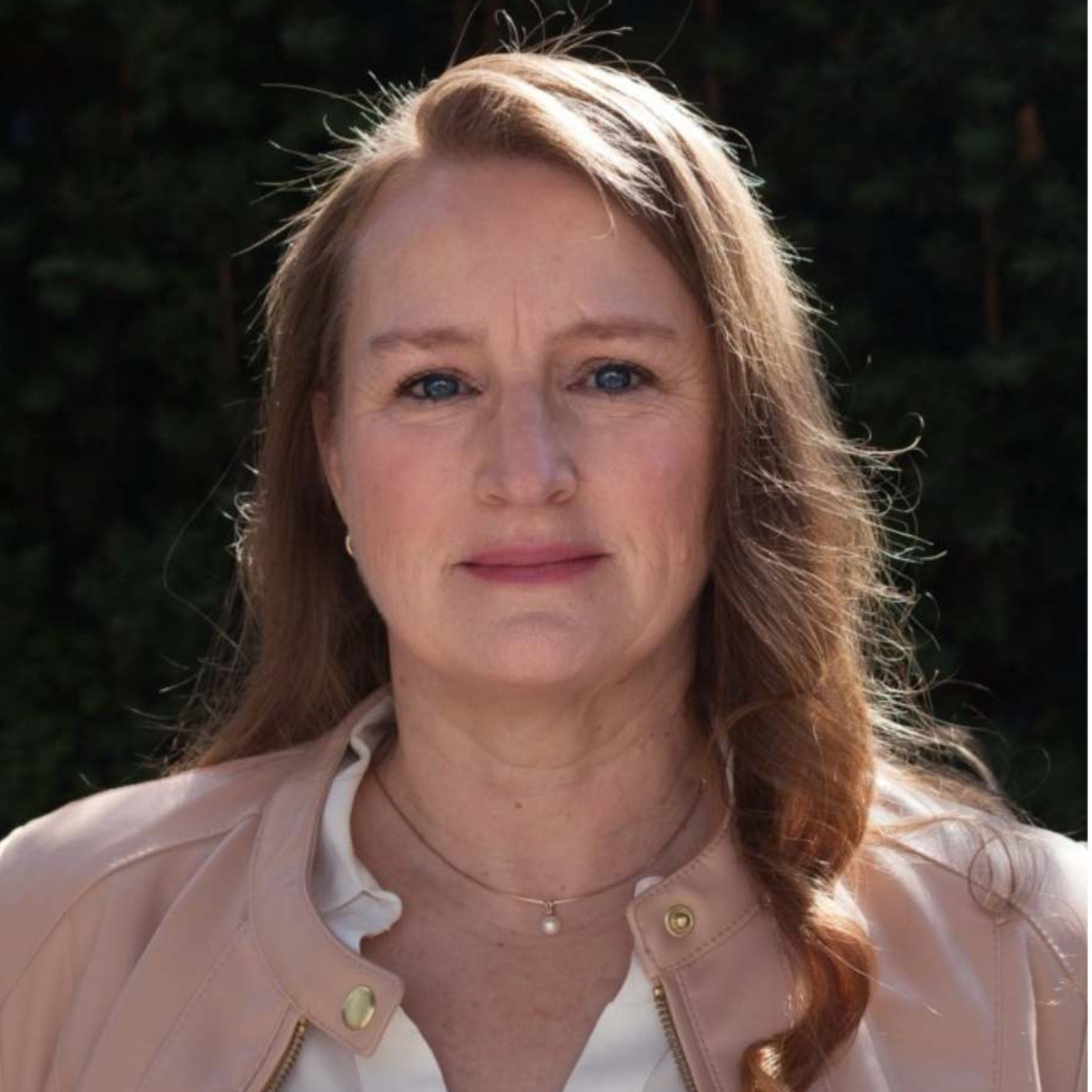
Episode 299 - Dr. Angela J. Buckley Shares Leadership and Gratitude Expertise
The Story
Dr. Angela J. Buckley is an acclaimed Leadership and Gratitude expert dedicated to transforming organizational cultures from the inside out. With a dynamic career spanning leadership coaching, consulting, and research, Dr. Buckley empowers organizations to build high-trust teams, reduce employee turnover, and cultivate leaders who cultivate thriving cultures.
Her innovative approach weaves together the power of gratitude with actionable leadership strategies, helping teams not just perform—but truly thrive. Dr. Buckley’s mission is simple yet profound: to help leaders unlock the human potential within their organizations, creating workplaces where people feel valued, engaged, and inspired to excel.
Be sure to subscribe so you never miss an episode on www.wealthacademypodcast.com, and if this brought you value, leave us a review on your favorite platform. It truly helps us reach more leaders like you. Until next time, keep leading with purpose and gratitude!
Speaker 1: Welcome to Wealth the Academy podcast. Thanks for tuning in to listen to this dynamic and insightful podcast with host Paul Lawrence Van. Paul and his guests provide content rich information that will enhance your knowledge. Enjoy this episode.
Speaker 2: Grand day everyone. Welcome to Wealth Academy podcast with your host, Paul Lawrence Van. We all know that wealth is more than just money, and today we have an expert on a leadership and gratitude expert by the name of Dr. Angela J. Buckley. She is extraordinary individual. You are going to learn a lot from her today, so glad that you could be with us. And for those of you who are entering, then post your comments, and we will reference them directly to Dr. Angela. Dr. Angela Buckley, good day to you.
Speaker 2: How are you doing today?
Speaker 3: I am fine. Thank you. We are having a break between all the storms. So life is good from our perspective.
Speaker 2: Fantastic. Fantastic. Glad to have you here. And she has someone that I've really been looking forward to interview with because she has just a background and expertise that is really off the scales. So today we're going to opportunity to talk with how And we'll start out with her intro. Today on the podcast, I'm thrilled to welcome Dr. Angela J. Buckley, a world class leadership and gratitude expert who helps organizations build high trust, reduce turnover, and God lead us to create thriving workplaces.
Speaker 2: Through her work, Dr. Buckley bridges the science of gratitude with the art of leadership, showing leaders how to bring out the best in their people and drives sustainable success. We're going to dive into powerful strategies, some real-world stories, and why gratitude might just be the leadership superpower. I repeat superpower, most organizations are overlooking. And Dr. Buckley, welcome to the show. And it's an honor to have you here. But before you start, I want to say that she graduated from the Ohio State University.
Speaker 2: Welcome.
Speaker 3: Thank you. Thank you. That is true. I have a few of those degrees over there. So Paul, it's such an honor to have this conversation with you today. I'm excited to explore this topic with you. We have spoken in a few other forums together as well. and just looking forward to sharing with your audience a little bit more.
Speaker 2: Fantastic, fantastic. Just wanted to let you know that we have a linked end user by the name of Cecilia from Florence, Italy that is saying hello to both of us in Galatapy. Listen, she really wants to learn more from you.
Speaker 3: So, well, excited to share what I have to offer. Thank you for joining Cecilia.
Speaker 2: Okay, fantastic. I want to start out with you in regards to where you're from, how did you get started? What was the inspiration for your academic aspirations? I would love to, and the listeners would love to hear more about that, and then we'll get started.
Speaker 3: So it's a little nantraditional, Paul. [UNKNOWN]: I
Speaker 3: lived in Germany when I was in high school. And when I returned, I won a scholarship from Congress. We have an exchange program called Congress Bundestags, so the two parliament exchange students. And so I was awarded one of those and lived with a family again. And then when I came back, I was like, look, I could graduate college really fast because I already speak German, right? I'll just take a German degree. But I was already in the engineering college. And the German professor was like, I don't think so.
Speaker 3: He's like, why? So he's like, if you're failing out of your engineering classes, I'll let you drop them and be a German major, but otherwise, no. So instead I have An engineering degree, a German degree, a master's an engineering. And during my master's program, part of the work was conducted in Germany for US car. Wonderful. And what happened there was that all three of the big three, so for jam and Chrysler had a
Speaker 3: So when you do US car, when you do some of these technological sharing, you also have the right to withhold information because, of course, you don't want to be sharing competitive advantages. So you can only do several research, right? Yeah, so you can only do certain research, and it has to be government supported, or some of these trade groups get away with this information sharing.
Speaker 3: They all looked at the data and they said, no, you can't share this one thing. And of course, it was the one thing that was the most common between all three. Had nothing to do in truth with the target of our research, because it was an engineering focus. So all of them allowed us to twittle dials, but none of us, none of them allowed us to talk about the people. And yet, we left about ten to twenty percent improvement opportunities on the table. for all three of them because we didn't talk about the people stuff.
Speaker 4: Sure.
Speaker 3: So, yay, I had this very technical master's degree that no very few people have read and yet people know of in the field, right? But the real learning is all of the information that we are willing to ignore so that we can focus on technical and not on the people systems. And that to find the arc of my engineering career. I am a continuous improvement, lean to sigma black belt. And I can improve your processes. I'm very good. I can save you a lot of money in your organization. And yet, if your people are not involved in that transformation, if this is not truly a cultural change, I'll walk out the door and everything will revert back.
Speaker 3: Absolutely. So we can put the changes on, but if the changes aren't maintained, what's the point? And so I started working more and more, trying to learn how do we help the people change? How do we, what does change look like? What does culture look like? And how do we help people learn and feel comfortable? Like there's a lot about that that changes uncomfortable. So how do we get people comfortable with change? Where they feel more secure because they have changed instead of secure in their own ways.
Speaker 2: Right. And the last thing that people want to do sometimes is change.
Speaker 3: Right. The last thing people want to do frequently is change. And yet the changes in fact what makes you more secure. So my PhD is far more focused on people, on change, on skills acquisition. It is generally a focus on hourly manufacturers, but a lot of those lessons translate out as well.
Speaker 2: Definitely. Thank you so much for that background and it's very rich in terms of your academics, your experience and also that collaboration between the universities and the different governments and the industries as well, car industry is a big industry. And of course, the wonderful country of Germany, which I've been there many times, my brother was there in Stuttgart. So I went through visit him. So thank you so much for that. So what land do you focus your life work on leadership and gratitude because That's what people really want to know about.
Speaker 2: That bridge in that gap between those two. Because people don't really talk about it that much. You don't hear that much about it. How do you project this reality to the organizations that you work with?
Speaker 3: It's a really great question. And the fact is that I was not good at...
Speaker 3: and communicating my gratefulness to people, right? So I always thought to myself, I'm really grateful for him, or I thought thanks, or, and I said thanks, please and thank you, so I'm polite, but polite is actually not expressing gratitude. And so I walked out the door one day as a continuous improvement manager, and I had literally an award winning team. My team won many local, and international awards. Very, very successful team that we were able to put together very proud of the work that they did.
Speaker 3: And I walked out the door one day and I said, thanks guys, it was a great day. Right, fantastic team, I could say that every day. And my teammates said, for what? It was not a great day. So that immediately will tell you that there is honesty between us and the team. And it did it caused me to stop short and I'm like, okay, clearly I didn't tune in to whatever was going on for him or them that day. And my day went very differently. So we chatted and I learned what they were facing. And truthfully, you get to a point where there's division of labor and teams, right?
Speaker 3: People are doing certain things and I more frequently interfaced with the CEO, and they were more frequently interfacing with where the change was truly happening, like doing with the obstacles. And clearly, that particular day was one of the rougher days in change management, and he had gotten earful from a maintenance guy.
Speaker 2: Yeah, the maintenance book, they want the business too.
Speaker 3: It is what it is, right? Like we live this, it happens. I've certainly had my fair share of ear chewing from people as we go through change. It was just, it was all morning. His turn in the barrel, that's right. But in the interest of not being toned up, right? It's our job as leaders and managers to hear what's going on in a daily basis and not just throw out platitudes. Oh, thank you.
Speaker 5: Yeah.
Speaker 3: So I did spend, I do what I love to do, a little bit of academic thrown in with a little bit of pragmatic and turned to the research books and really learned how to express thankfulness in a way that touches them, right? That really is being very specific. And so through that exercise of putting it together, how do I say, thank you in a way that is truly impactful? I also learned that in general, you can also use this as a feedback formula, and I'm a big fan of pneumonics frameworks because it's easier for people to memorize, right?
Speaker 3: And I'll just say I was grateful as I was going through a variety of exercises to come up with a pneumonic that the spirit is like a great word. It's very fitting. You can tie it together in different ways and it just works and conveniently it works reasonably well and Spanish as well.
Speaker 2: Absolutely. And the thing about it is that when I try to explain a leadership to people, that in your capacity, when you were working with your team, you were a leader too. They were leaders.
Speaker 3: Always.
Speaker 2: There.
Speaker 3: Absolutely.
Speaker 2: I have a team leaders. Everybody's leaders. Yeah. Everyone in the organization is a leader. And for them, their day to not be as good as your day was at that particular moment, that really was gave you the opportunity to go through that feedback loop.
Speaker 3: Yes, yes, right? And the honesty I appreciate on it all the other ways, like I'll accept it. So that is the turning point in how did, I mean, I truly, like I have a great team. I love those people still. I don't see them as much. We chat from time to time, see connections on Facebook or something, but it's truly one of my favorite teams that I had worked to work with for me.
Speaker 2: Fantastic, nothing beats experience. Yeah. So we're known for helping organizations build high trust teams. Let's talk about that a bit in terms because right now, given the workforce and the workplaces in the United States and other countries, it's really up against some challenges because the dynamics, organizations, structures are changing, leadership is changing. Let's talk about high building high trust teams and value that that adds to organizations.
Speaker 3: money straight up money the productivity and the creativity and the innovation that is associated with a high functioning team is difficult to assess but you know it's difficult to assess in the moment but you know what happens as soon as they're disassembled right once you take them apart and you lose it so that's probably the biggest challenge when it comes to the assessment of teams you have to look at a good team and a bad team or a before and after It's difficult to truly like get that picture in that moment.
Speaker 3: I am a disc authorized partner with the high-functioning high-performing teams, the vibe behaviors of the high-performing teams. So from David Lanzioni in his book. Wonderful book. It is a great book, right? I'm sorry.
Speaker 2: I have the book.
Speaker 3: Excellent. I like, I'll say I like the training better than the book. The training is is excellent. And it does take time. It's not something that happens in it's not like a one year video. This takes time. First of all, it's learning of the skills, but it's also learning of accountability between team members. Yes. And that conversation and that honesty and the vulnerability associated with working together is really where you see the secret sauce. Got it. Yeah. Right. So it's reliability, of course, but that accountability of, hey, I have a problem or the vulnerability of I have a problem and you're an expert in this, but it's on my task.
Speaker 3: Can you help me? What am I missing? Let's take a look. I'm a big fan of the designated know. Are you familiar with the designated naysayer? Yes. Okay, right. So I'm a big fan of having one person coming in who is tracking and one person. And these are roles that should be rotated from meeting to meeting, right? Shouldn't be the same person on the time. But there is value in having somebody go through the exercise of what could go wrong. No, what could go wrong? I don't see it that way because. And again, it's important not to have that as the single's the same person every time.
Speaker 3: Because seeing as the negative Nancy, as opposed to helpful.
Speaker 2: Exactly. Yeah, that makes a lot of sense because you have a new set of eyes looking at it. And when you have a new set of eyes, you have a new experiences, it goes into the training one has received and also in their experiences as well.
Speaker 3: Well, and when we talk about diversity and I am on a huge advocate for diversity, equity, inclusion, belonging.
Speaker 3: One of the things, one of the number one things that I think that we miss for the people who don't understand the importance of it is that perspective. Speaking as a five foot one female engineer, right? Like there are a lot of vehicles in the United States that I would drive if you were to ask me about my personality, but I will not drive because they don't fit me. I literally cannot reach the pedals in some cases. And yet, there I'll tell you there's one automotive company that is done a fantastic job for females driving trucks.
Speaker 3: And the other ones are not American companies. So it is possible to design two seats that will fit in a comedy, a broader spectrum of the people, but you have to decide that you're going to want that. And that means generally you need to have that perspective in the room. So companies have done a great job with that and others have been more resistant.
Speaker 2: Exactly. And there's a market for it as well.
Speaker 3: Here is a huge market for women driving drugs.
Speaker 2: Absolutely. And you see more women driving now, but not as many as should be. And again, part of it is what you just stated. You know, just me.
Speaker 3: If I can't reach, you know, what's the point? It's not safe. Or I can't see. So I got in a vehicle. It's from it. It's actually the same maker. It was a GM vehicle. The body type was similar. Sure. But one had
Speaker 3: For me, the worst blind spots. And then I got in the next year's model. And I was like, this is completely different experience. Even though size wise, they were comparable. They were in the same class. But it makes a huge difference on being able to adjust and see and be safe.
Speaker 2: Right.
Speaker 3: So the size.
Speaker 2: Uh, me, I tried to I went to the car show here in Washington, DC and I got it or vet and almost couldn't get out.
Speaker 4: Yes.
Speaker 2: Angela, I was in a Madonna. It helped me to get out of this car because again, as you stated, structure wise. It didn't fit me. I'm on the toilet. Yeah. Yeah.
Speaker 3: And the Corvets are always a little bit. I'll remember the first time I drove my mom in a Corvette and she was like, Can't get out, you know, and she's very athletic, so she could, but she never had sat in that laid back, right? Like it's a very sporty, quiet position.
Speaker 2: You're leaning back and join the ride.
Speaker 3: We're going fast.
Speaker 2: Yes.
Speaker 3: Whatever. Maybe I might might have gone fast.
Speaker 2: Absolutely. So let's transition just a bit in terms of companies who struggle with high turnover. And I know, at least if we looked at the US and the federal government is not really turnovers no longer employed, but for the companies that still exist, and the turnover aspect, what are some reasons for the turnover and your ability to turn them around to retain their top challenge?
Speaker 3: Ultimately, the question really comes down to leadership, the leadership want to listen to their employees. If you're a leader who's walking around saying, nobody wants to work anymore, you're already closed off to the solutions.
Speaker 5: Yes, yes, the doors closed.
Speaker 3: The doors closed. I have also heard many leaders walk around saying, well, everyone should think like an entrepreneur. Sure. And yet we don't treat the people like entrepreneurs. Like one of the reasons entrepreneurs go into work for themselves. It's not to work for you a few hours. But we do have more freedom in choosing which hours we're going to work. And for me, that means starting at four a.m. but by one o'clock, like today, this will be the extension of my day. I'm tired.
Speaker 2: Yeah. Right. I remember early risers will.
Speaker 3: So, and you'll see that, like entrepreneurs do not work for your hours. They work different hours. And there's a little more flexibility in that. And as a result, you're driving your energy levels and your creativity levels. So that's not always possible, especially in manufacturing. And in service industries, you have to cover hours. Don't get me wrong. However, if your people are not thinking like entrepreneurs, then you also have to understand that they are also probably not working in their prime creativity hours.
Speaker 3: The other thing that adds to a lot of the stressors is that we do have a more divided workforce. And by divided, I mean diverse, and those reasons that they are struggling to come into work are very different. We have more generations in our workforce today than any other time. Like I have literally got off the phone recently with an eighty year old who is still working You walk into Walmart and you know that some of these greeters are well over seventy.
Speaker 2: For sure.
Speaker 3: And yet you have kids entering the workforce at fourteen and fifteen.
Speaker 2: Yes.
Speaker 3: So consider that seven. Great divide generations. And when we say that we're struggling with communications over struggling with like some of these people have lived through world wars.
Speaker 5: For sure.
Speaker 3: And famine and other ones during their most critical social-skilled development, spent the year in the bedroom because it was COVID.
Speaker 5: Yes.
Speaker 3: So those kids are entering the workforce and we're seeing that they need more coaching.
Speaker 2: Coaching is probably professional. Communication skills, been work on time, not been in the face of the phone so much, but actually getting the work run.
Speaker 3: That's a big deal, but their communication is actually with their friends via the phone. And even their coworkers, right?
Speaker 2: It's just, absolutely. Instead of calling, picking up phone, calling, are going directly face-to-face, they want to text.
Speaker 3: I mean, don't, don't call me.
Speaker 3: But I would go face-to-face. I would, any day, go face-to-face over picking up the phone.
Speaker 2: Absolutely.
Speaker 3: Right? Like, everyone has their preference in addition to.
Speaker 2: Absolutely. Yeah, many as far as production, I was an employee with mobile all company in Texas, one of the professional workers, but I actually worked at a physical plant. So I saw that side of it with the chemical engineers and with a maintenance personnel. And that was interesting. And then when I was in college, I was with UPS. So there was some more designated hours when you had to be there. And a lot of them were changed. Yeah.
Speaker 3: It's very difficult. So I recently recently. It was a while ago. But I was interviewing to hire. And the lady had already worked there in the past. And I'm like, well, why are you interviewing to come here? And she's like, well, I liked it. But I couldn't work the hours. I couldn't put my kids on the school bus. He was working.
Speaker 5: That's a great.
Speaker 3: And she couldn't get her kids on the school bus. So she literally had to quit the job. Go down the street. Sure.
Speaker 3: Then when her kids no longer needed school boss support, she came back to the company. And the company is like, see, we did fine. And my perspective is you just lost a fantastic employee for six years. And all of the productivity and like, loyal and knowledgeable, like a hard worker, not just a person. That's what you see someone is just a number. That's where that's where you start running into turnover issues. Humans do not want to feel like numbers.
Speaker 2: But sure. And when you look at the aspect of most employees for physical company, a plant are some other type of manufacturing business, they are part of the community. So the taxpayers and the go to schools together, house and worship together, entertainment. So it's a full community in which they're dealing with with this woman. That's exactly what that was. They were dealing with a community.
Speaker 3: And what we've seen, and this is not new research at all, but once you break trust in the community, you have lost your high quality workers.
Speaker 2: for sure.
Speaker 3: And they don't come back for generations.
Speaker 2: And they tell other people about that experience as well.
Speaker 3: They don't come back for generations.
Speaker 2: Exactly.
Speaker 3: Exactly. Exactly. So, you know, some of these organizations have gone from waiting lists to we can't hire anybody, or you hire the next breathing person, whether they're skilled or not. And that becomes seriously problematic.
Speaker 2: So that's it.
Speaker 3: And so turnover doesn't have to be. So the cost of turnover is right that's different than what's happening in the U.S. government, the U.S. government.
Speaker 2: Right.
Speaker 3: However you want to play what the politics, it was a calculated decision to reduce overhead. That has not that is not turnover.
Speaker 2: Correct.
Speaker 3: Right. turnover is when when you as the organization are not in control of whose leaving.
Speaker 2: Exactly.
Speaker 3: Some of that is normal, right? So we talk about normal attrition, people age out.
Speaker 2: There is a lot of professional growth. Hey, salary and benefits.
Speaker 3: Yes, so and also like you often create a space like three, three people will be competing for the next promotion. One person gets it often. One will stay and often one will leave.
Speaker 5: Yes. Great.
Speaker 3: And you have to plan for that. Like you're absolutely a successful or development team will be looking and expecting one of your three to leave. Even if you don't want them to. But you know that if you're having competitions and error parents and these types of things, eventually there is natural attrition at that level because there is there is only so far that you can go, you can't bring everybody up. There's a reason or charts go up and pyramids not flat up, right?
Speaker 5: Absolutely.
Speaker 3: So those, those things are normal. This, this is healthy organizational development. And if you manage that correctly, the person that left leaves on good terms, they knew where they were standing, they knew that they were in competition.
Speaker 3: And they still have fond relationships of the people back in their organization. That's ideal because when people are asking around in the industry, where should you go work, having those positive stories carry. Again, they carry into generations.
Speaker 2: It's not important. Absolutely.
Speaker 3: So the turnover that becomes problematic is We call it, in some cases, we call it turn. So turn is the areas that are under ninety days. Coming in, coming out, coming in, coming out. That often means that there is a problem with the job. Maybe with the workforce in the onboarding, but also with the job. So you can take a look at that. Are you bringing people on correctly? But if you are, if you do have an onboarding problem and there's one position that's continually turning over. Then that particular one you go and you study from a workforce development perspective, but also from an EHS, right, an ergonomics perspective.
Speaker 3: What is happening? Are we building them up physically so that they're prepared for the work? Some of this work is more physical, right? And that is different. Also, we don't have people that have been working farms and coming into factories anymore. That used to be the day. And the factory was easier work than the farm.
Speaker 3: And we're not taking farmers into factories. We're taking city dwellers into factories. And with all of the technology that they've been learning in school, they don't have the same physical
Speaker 2: Exactly.
Speaker 3: And we do often have to think about this almost as an athlete, right? Like as an athlete, I talk about, okay, we're going to build and pause and build and pause and build and pause. That's how you build these gains. It's it's far more difficult to have that conversation with people in the manufacturing setting because I need you to make ninety eight percent, right?
Speaker 2: Like sorry. Hard work.
Speaker 3: It is. It is hard work. But learning how to build and have programs that build people up to speed is is very helpful.
Speaker 2: Yeah, absolutely, absolutely. Now, one of the things that you do and you do it with excellence is you empower leaders to create thriving cultures. Let's talk about that just a bit because again, when we look at an organization, it's really a community into itself. It's a culture unto itself.
Speaker 3: It is, and that's right, where I was going to go next. So perfect question. Thank you, Paul. That's the other thing that we start looking at. Once you've kind of like figured out the job and the knowledge associated with the job and the physicality of it, then you start talking about the culture. And do people know how to offer gratitude? Do people know how to give feedback? Do you know how to hold people accountable correctly? like not just yelling at people, but truly what does accountability look like?
Speaker 3: And do you know how to run a meeting? Do you even in fact run a meeting, right? And do these people understand what the work is that they're doing and how it impacts the overall pay.
Speaker 3: The success of the company depends on the people on the floor.
Speaker 2: And again, they generate the revenue.
Speaker 3: They're generating the revenue and quality matters a lot quantity matters quality matters more yes especially in a sense of the competition who have the competition is in the particular industry.
Speaker 2: Definitely definitely matters it makes a difference and also what makes that difference is who the leader is and as you stated, are they communicating that vision and the mission and the goals to the managers and the employees and our subcontractors as well.
Speaker 3: In fact, that is one of the things that we talk about, even with the spirit of acknowledgement, is can you tell the story? So, a manager, the more successful you become, the more critical it becomes for you to be able to tell the story between the employees, actions, and the outcome and the vision of the company. And when you use the spirit method, it will help you write that story succinctly.
Speaker 2: Yes, I have to be able to tell that story. That's the lifeline of the company.
Speaker 3: It is.
Speaker 2: Yeah, it is.
Speaker 3: Yeah, how are your day-to-day impacting the overall metrics? And being able to express that cleanly, quickly, in a personal way, in a personal manner, really matters.
Speaker 2: Absolutely. For sure. So, let's use an example of if a team is struggling, let's say if they have a low morale or there's some conflict within the organization, are on the teams. What first steps do you recommend leaders take to turn things around? Because that can happen on occasion. And we want to have an outlet, if a leader encounters this on their teams or in that workplace.
Speaker 3: Sure. I mean, I start with one on one. So if we're already seeing conflict, I need to understand, I need to have one on one. And I am a big fan of kind of problem statements, and then refined problem statements. So you'll hear my engineering come out here a little bit. But asking the questions of who, what were one, why, how? If you're going to talk about a specific event, this matters. Are you also familiar with Scarf? I do a little bit of talking about scarf in some of my social media posting where you talk about what that resistance is to change.
Speaker 3: But if you can bring the scarf into some of your problem solving problem defining it will help you get to the bottom root of the emotional part of what's happening. So when we talk about the scarf, we talk about status, the certainty, like how comfortable a person feels, like not shifting sand sort of autonomy. So they want to be able to make their own make decisions about their day-to-day related dances, sort of like where you fit in other people's relevance and it doesn't even work for you. And then fairness.
Speaker 3: Yes. And so like that's not my model. It's been out there. It's been posted for many years, but using it in these kind of conversations is very helpful. And to understanding where that other person is coming from. Recently, we did an exercise at one of the workshops that I was running and I asked them, what are you afraid of and what makes you feel seen? Yes. And we sometimes need to just get that understanding of that personality.
Speaker 3: You know, not everybody is going to be immediately vulnerable and just open it now. So you have to build those relationships. And also be aware of like there's a time in place for sure. You don't need to be asking that in the room. You don't need and your probably shouldn't be asking that in the heat of the moment.
Speaker 5: Right.
Speaker 3: Right. So we have to get to know your employees one on one before the conflict arises so that you already have a fundamental base.
Speaker 2: Absolutely. Yeah, that's absolutely a great way to do it. I know there used to be a time. Let's say, for example, I was in the military twenty two years prior to me getting there, they would dress a person down in front of everyone. They don't do that anymore because it's not safe.
Speaker 3: Well, it doesn't lead to psychological safety either.
Speaker 2: Absolutely. It doesn't. I use an example if I was at UPS. We never really had problems because we were so busy working.
Speaker 2: We didn't have the problems.
Speaker 3: There are sometimes problems because people are so fatigued that emotions do blow up as well. So there's a lot to be said for the heat fatigue and scarcity mindset, making decisions when the pressure is critical.
Speaker 2: Right. Exactly. Exactly. Well, thank you so much for that. Let's move on to the section of this podcast. And we're going to talk about Dr. Angela Buckley now. It's another amazing thing that she does. Let's talk about your book a bit. If you can share with us about your book because I want people to know something about that as well.
Speaker 3: Sure, so right now it is in ebook status and if you pick it up from my website somewhere but it is talking about recognition and results and has a bunch of great stories but also a bunch of great statistics in there on how when you introduced gratitude as an as an organizational value. There's money like it's it's easy money because people are feeling more culturally attuned because they're feeling recognized and because they're feeling seen. That reduces that scarcity mindset. It builds the psychologically safe workspace and in turn, people work more prone to put up the productively.
Speaker 3: You think I've never said that word before, but people work more productively when they feel safe, when they feel calm, when their body is in a state of regulation. And offering recognition and gratitude to your employees allows them to regulate.
Speaker 2: Absolutely, yes. And they're holding different events. Office may just shut down just a bit just to recognize. For example, we used to have organizational excellence type events. I will organization and military win and award. And a lot of it was based on TQM, total quality management.
Speaker 3: Yep.
Speaker 2: Dr. Deming.
Speaker 3: I might know a few things. I probably have assigned workers who back here from Dr. Deming.
Speaker 2: Me too. And I've met him in Philadelphia, I was going through the program. And that's a really great model as well because he went to Japan and he helped them with their systems over there.
Speaker 3: Because we didn't want to listen to him here.
Speaker 2: Exactly. Which made it didn't make my sense, but he proved him his point in time. So thank you.
Speaker 3: As my cousin will tell you, it's biblical. You can't be a prophet in your own land.
Speaker 2: There you go. I like that. Okay, so let's talk about your podcast.
Speaker 3: Okay, thank you for mentioning that. So voices in leadership is a live podcast. We do post that on LinkedIn and YouTube and I try to get it out to Facebook, but Facebook hasn't been playing nice all the time. So
Speaker 3: I invite industry leaders to come and share their thought leadership with us. The reason that we are live is that we invite people to have questions. And what do they want to know and how can we answer them in that moment? And then it goes back out as a podcast that following week.
Speaker 2: Now, I sign up to view, be a viewer of it, and subscribe, or of it, however, my schedule threw me off, but the next time you have a podcast, and you bring a guest on, I'll be there.
Speaker 3: OK, Friday.
Speaker 2: I'll be there.
Speaker 3: I think it's Friday at one o'clock. I guess I'll check my calendar.
Speaker 2: OK. Fantastic.
Speaker 3: Yes. In fact, it is Friday at one o'clock.
Speaker 2: Friday at one o'clock. OK, one o'clock. I won't be able to make this Friday because I'm doing the keynote keynote address. Oh.
Speaker 3: for Blue.
Speaker 2: All right.
Speaker 3: Well, I'll be out there. We're not stopping anytime soon.
Speaker 2: Okay, fantastic. Now, you are the recipient of a United Nations Award. We'd like to share that with us as well. Dr. Angela?
Speaker 3: Yes. Thank you for mentioning that. The United Nations Global Peace Council looks for global leaders who are making a positive change in their in their immediate areas. And so I was recognized as one. I am a member of the Global Women Speakers and it is an organization that works closely with the Global Council. Peace Council. And so within that we I think there were three of us that were recognized for our expertise and mine was specifically gratitude and leadership expert.
Speaker 2: Wonderful. Congratulations on that. You know, that's not a small thing. It's a big thing.
Speaker 3: It's a little bit, yeah. I was very, it's a little surreal. It was great. We had our did the picture on the billboard in Times Square and my cousins, I have two cousins that happened to live in New York City. So they came as well and, you know, it's always nice to have a little family by your side.
Speaker 2: Well, especially in New York, I have so many family members. They have people taught out, I live there. Nice.
Speaker 5: Yeah.
Speaker 2: New York is really nice. I love that city. So fantastic. Now, one of the things that I want to talk about, which I kept telling people, you're going to learn something about Dr. Bumpley that we've never knew. And of course, it's that you are a US team, USA track athlete.
Speaker 5: Yes.
Speaker 2: And I said, I told people in the promotion that she can help improve your life. So what that experience is like, I've been on a team track Athalon before. OK. Did you run? What did you do? I did the run. I did the run. I remember swim a mile in the ocean, the Caribbean, and another one wrote the bike, twenty six point two miles there, distance of a marathon. So share with us what that experience is like and you're going through that training now.
Speaker 3: I am. So I just love it. It brings me a lot of joy. I will tell you the age group triathletes. So I'm, you know, aging up a little bit, but it's generally recognized but like the women, the fifty and over women all the way up like amazing amazing people like there is a smile on course all the time and they are the ones but we're that we're really the veterans that help it's so interesting between the men, between the women, the youngsters or whatever, there's this group of joy. You can always see where we are.
Speaker 3: So the way they start our times is often based on the number of people so that you don't have too many people in the water. at one time. So different races, you'll see this age group starting at different times, just depending on the way people show up or register for a race. But you always know where that group is because there's a little prayer group somewhere. There are people sharing fingernails and Like they go all out for red white and blue fingernails, I have blue circles today.
Speaker 3: But the sharing and the caring in when you're in transition, right? So depending on the size of the race, we either have to set the bikes up the day before smaller races, we can set up that day. But national and world international races, you're setting it up.
Speaker 2: Yeah. And they have to check for the quality of the water for sure.
Speaker 3: And the quality of water also are uniforms. You have to be wearing your team Federation uniforms. So you have to show that. You have to have the right helmet. There's there's safety built into all of our checks as well.
Speaker 2: So that's the health and health check.
Speaker 3: Bike check is real. That's the real reason the bigger ones are doing.
Speaker 3: the day before, because you're literally going to have a safety inspection of two thousand bikes.
Speaker 2: Oh, for sure.
Speaker 3: That's what you're not putting your ears, but they're technically basic.
Speaker 2: Yeah, it's really health and wellness issue, mind, body spirit, and so when you travel on for sure.
Speaker 3: Yeah, so learning, you know, I would just say that if you can do some of those distances, you know, you can pretty much do anything. So there's a lot to be said for you see a big difference between your first timers, even first one two or three times and the people who are truly out there as a lifestyle. Absolutely. The calmness, like they're still the excited nerves that you need for like a great performance. But there's also a calm and a willingness to help. And I already, my stuff has already laid out.
Speaker 3: So yes, I can help you because I've done it so many times. It becomes very routine. And then there's, you'll see, again, your more advanced racers, seasoned racers will be doing some mental visualizations. You'll hear affirmations and sharing of affirmations. This is what works for me. mental toughness mental right mental toughness you should have been practicing all along but affirmations because every day bring something different you know like I showed up to one race and there were jellyfish everywhere and there's just you just have to decide you're going to get in and go great so learning how to deal
Speaker 3: learning how to regulate like emotionally regulate so that your body is prepared for its best performance on any given day and also understanding endurance racing is different than sprint racing from the perspective of. We have A B and C races and it's very important to race at the right level for that day so that your A race is your truly like best time right. give us a lot of the season we create, we create that mental toughness of what the effort is going to be. This is a training race. This is a focus on my run race.
Speaker 3: This is a focus on my nutrition race so that the A race you pull it all together.
Speaker 2: Exactly. Yes, thank you. Thank you so much for that. And you making a difference in the lives of others, including me because I've worked out, but not like I used to, I need to get back to the hard work out.
Speaker 3: So, and the discipline of working out at the right intensity.
Speaker 2: Exactly. Exactly. That's it. I'm not planning on going to Olympics other than to observe.
Speaker 3: I sent my partner a text message. I said, here are the dates. So the twenty twenty eight Olympics in LA. The first metal ceremony will be for triathlon. For those for those who care. Yeah. My team all over here for you. So I already sent a message over and said, do we have a date?
Speaker 2: We'll be using your hotel points so. Right now. Absolutely.
Speaker 2: Absolutely. So in partying, I would love for you to provide some comments in terms of people who are listening now, some of the leaders that are out there in a corporation, small business owners, women entrepreneurs, that you can encourage them to keep going from a leadership perspective and from a gratitude perspective.
Speaker 3: So that's a great question. When things feel tough, We know that movement is actually one of the biggest ways to get through some of that toughness. And that means straight going straight through a storm is often the shortest way through. It also means understanding truly the physicality of our humanness and using our largest muscles that's glutes and quads, by the way, actually triggers a mind-body connection that will reduce anxiety, reduce the symptoms of depression. And so if you're at a point where you're feeling anxious, that's different than anxiety, right?
Speaker 3: You can really move through that by simply making sure that you are going through a physical routine. When you least feel like it is probably when you need to do it most. So sometimes that is a motivation and discipline conversation with yourself. I don't want to probably means you should.
Speaker 2: Exactly.
Speaker 3: I would also encourage entrepreneurs in particular to make sure you get enough rest. Yeah, yeah, yeah, yeah, yeah, yeah, yeah.
Speaker 2: Absolutely. Well, thank you so much for that. Now, I know what I want the listeners to appreciate is the fact that our amazing guest today Angela J. Buckley, Dr. Buckley has really provided us with some really expertise that we can all use and apply as entrepreneurs, as corporate leaders, non-profits, education, and more. And she's not going to leave you without providing you a free gift And we're going to put this up here right now. How you can connect with her. And if you were to share just a little bit, Dr. Buckley about your free gift.
Speaker 3: Sure. It's a seven day email class. It walks through the spirit of acknowledgement. And so each day kind of talks about who and then how and what the spirit stands for. And so it helps you create and craft that acknowledgement statement. And, you know, at the beginning, this takes a little bit of effort and just like anything once you get practiced, it becomes something that becomes very innate. And so sometimes we spend a little more time on it upfront. That's what the seven day email classes about.
Speaker 3: And it will help walk through that process. And if you have any questions, all you need to do is reply and it'll come right to my inbox.
Speaker 2: Fantastic. And they can get it at www.strengthandnature.com. I'll repeat it again. www.strengthandnature.com. Dr. Buckley, the seven-day email class, the spirit of acknowledgement. And one of the things I want to say important is to thank you so much. Again, our on-it-guess, as you can see here, Dr. Angela J. Buckley, And we hope to hear more from you. And we'll have more people following you out our fans there. And Florence, Italy, did a due to us both, but they wanted you to know that they really appreciated everything that you provided today.
Speaker 2: And there would be more people than the same thing as well.
Speaker 3: Thank you, Paul, for having me. I have enjoyed getting to know you over the past few months and look forward to creating with you in the future.
Speaker 2: Yeah, fantastic. Again, everyone, we have Dr. Angela Jane Buckley and she is a leadership and gratitude expert and we appreciate everything that she provided today. It was an honor to have her here. So go out on wherever you get your podcast apple podcasts, Spotify. iTunes, Amazon, music, get out there, rate and review this particular episode, which is episode two, ninety nine. And I give her at five-star rating. She's doing exceptional work, and we want to follow her, not only now, but in the future.
Speaker 2: My time is up, and I thank you for yours. Have a great day. I'll see you all on the next episode of WellF Academy Hotcast. Have a great day, Dr. Angela.
Speaker 1: Thank you for listening to this episode with Paul and his guest. I hope you enjoyed this episode and Paul requests that you write and review this episode and others on Apple Podcasts and wherever you listen to podcasts. View all wealth academy podcast episodes at www.wealthacademypodcast.com
 Apple Podcasts
 Castbox
 Castro
 Goodpods
 Moon FM
 Overcast
 Pocket Casts
 Podbean
 Podcast Addict
 Podcast Republic
 Spotify